How Does a Soft Robotic Gripper Differ From Traditional Robotic Grippers?
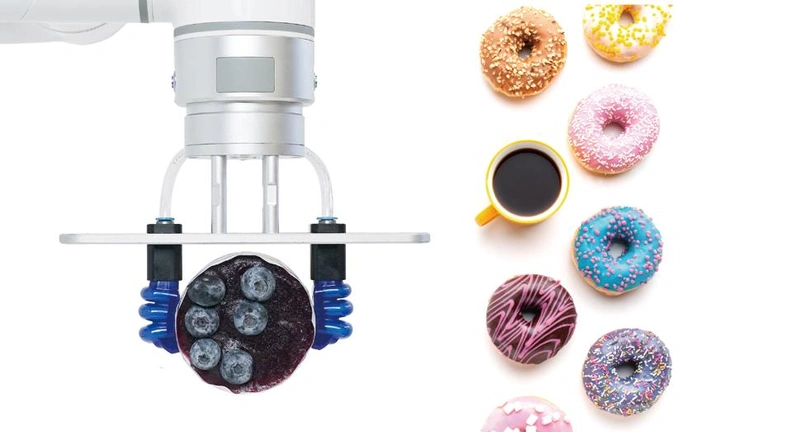
A soft robotic gripper is a flexible gripping device designed to pick up, hold, and move objects without relying on rigid metal fingers. Unlike traditional robotic grippers, soft grippers use flexible materials such as silicone, elastomers, rubber-like polymers, and other compliant materials. These materials allow the gripper to change shape when it interacts with an object.
Soft gripping focuses on adapting to the shape, size, and surface of different products. This makes the technology useful for applications where robots need to handle delicate, irregular, or easily damaged items. Instead of forcing an object into a fixed position, a soft robotic gripper can conform around it and distribute pressure more evenly.
How Do Traditional Robotic Grippers Work?
Traditional robotic grippers usually use rigid mechanical components to grasp objects. Many designs feature two or more solid fingers that move toward an object and apply force to hold it securely. These grippers can provide accurate positioning and strong gripping performance in controlled industrial environments.
Rigid grippers work particularly well with objects that have consistent shapes and sizes. For example, a factory robot may use a mechanical gripper to move metal parts, machined components, boxes, or other standardized products. Engineers can program the gripper to repeat the same movement thousands of times.
However, rigid fingers have less natural flexibility. When an object has an unusual shape, soft surface, or fragile structure, the gripper may require special tooling or careful force control.
Why Does Flexibility Matter in Robotic Gripping?
Flexibility represents one of the biggest differences between soft and traditional grippers. A soft robotic gripper can deform around an object instead of maintaining one fixed gripping shape.
This flexibility helps robots handle products with different geometries. A single soft gripper may pick up several objects without requiring frequent mechanical adjustments. The gripper can gently conform to the surface and create a stable contact area.
Soft gripping can also reduce the risk of damaging sensitive products. Food, agricultural products, consumer goods, and delicate components may require careful handling. A compliant gripper can absorb some of the interaction forces instead of transferring all the pressure directly to the object.
How Does Soft Gripping Handle Delicate Objects?
Soft gripping provides a useful approach for handling fragile products. Traditional grippers can potentially create concentrated pressure points when their rigid fingers contact an object. Operators can reduce this risk by adjusting gripping force, changing the tooling, or using specialized contact surfaces.
A soft robotic gripper approaches the problem differently. Its flexible fingers can wrap around an object and create broader contact. The material itself provides compliance, allowing the gripper to adapt as it closes.
For example, a robotic system may use soft gripping to handle fruits, vegetables, packaged foods, bottles, or other products that can deform under excessive force. The exact performance depends on the gripper design, material, control system, and application.
How Do Soft and Traditional Grippers Compare in Object Handling?
Object handling provides a clear way to understand the difference between the two technologies.
Traditional robotic grippers generally perform well when the robot handles predictable products. Engineers can design the fingers around the object’s dimensions and program precise movements. This approach delivers repeatable results when production conditions remain stable.
A soft robotic gripper offers greater adaptability. Its flexible structure can accommodate changes in object shape and position. This can reduce the need for highly precise alignment before gripping.
For mixed-product environments, this adaptability can simplify automation. Instead of designing a separate rigid gripper for every object, manufacturers can explore soft gripping systems that handle a broader range of products.
Does a Soft Robotic Gripper Require Less Complex Control?
Soft grippers can simplify certain gripping tasks because their physical flexibility helps manage contact with objects. The material can naturally deform during the gripping process, which can reduce the need for extremely precise finger positioning.
Traditional grippers often depend heavily on mechanical precision. The robot must position the fingers correctly and apply an appropriate amount of force. Sensors and advanced control systems can improve performance, but they can also increase system complexity.
Soft robotic systems still require appropriate control. Pneumatic pressure, electric actuation, vacuum systems, tendon mechanisms, or other technologies may control the movement. However, the compliance of the gripper can provide an additional layer of adaptability.
How Do Materials Affect Gripper Performance?
Materials play a major role in the difference between soft and traditional grippers. Traditional grippers often use metals or hard engineering plastics because these materials provide strength, durability, and dimensional stability.
Soft grippers use flexible materials that can deform under pressure. Engineers select materials according to the required grip strength, flexibility, chemical resistance, temperature range, durability, and hygiene requirements.
The material also affects how the gripper interacts with the product. A soft contact surface may provide better traction while reducing surface damage. For industries such as food processing, manufacturers may also consider materials that meet relevant hygiene and cleaning requirements.
Companies such as Soft Robotics Inc have helped demonstrate how compliant gripping technology can support automated material handling across applications that require adaptable object handling.
Which Applications Benefit From Soft Gripping?
Soft gripping can support many applications where traditional rigid gripping becomes challenging. Food processing is one important example because products can vary in size, shape, texture, and firmness.
Agriculture can also benefit from flexible robotic handling. Robots may need to interact with produce without applying excessive pressure. Packaging operations can use soft grippers to handle products with different dimensions or surfaces.
Other potential applications include:
- Food and beverage processing
- Agriculture and harvesting
- E-commerce fulfillment
- Packaging and sorting
- Consumer product manufacturing
- Electronics handling
- Pharmaceutical packaging
- Laboratory automation
The best choice depends on the product, production speed, required grip force, environmental conditions, and automation goals.
Are Traditional Robotic Grippers Still Useful?
Yes. Traditional grippers remain highly useful for many industrial applications. Their rigid construction provides strength, precision, and predictable movement. When a production line handles identical components at high speed, a traditional gripper can provide an effective solution.
Rigid grippers also offer many established designs. Manufacturers can select parallel-jaw, angular, three-finger, vacuum-assisted, magnetic, or specialized mechanical configurations based on their requirements.
Therefore, soft gripping does not simply replace traditional gripping. Instead, it provides another approach for applications where flexibility and adaptability matter.
What Are the Main Benefits of a Soft Robotic Gripper?
A soft robotic gripper can provide several advantages:
- Flexible contact with objects
- Better adaptation to irregular shapes
- Gentle handling of delicate products
- Reduced dependence on perfectly aligned objects
- Potentially broader product handling
- Improved adaptability for variable product sizes
- Useful compliance during gripping
These advantages can make soft gripping attractive for manufacturers that want to automate tasks involving products that are difficult to handle with rigid tooling.
What Challenges Should Manufacturers Consider?
Soft grippers also have limitations. Their flexible materials may wear over time, particularly in demanding industrial environments. Manufacturers must evaluate durability, cleaning requirements, operating temperatures, chemical exposure, and maintenance needs.
Soft grippers may also have different force and speed characteristics than rigid mechanical grippers. Some applications require very high gripping forces or extremely fast repetitive movements, where a traditional design may remain more appropriate.
Engineers should therefore evaluate the complete automation process rather than selecting a gripper based on flexibility alone. Product characteristics, cycle time, payload, environmental conditions, robot compatibility, and total operating cost all matter.
How Is Soft Gripping Changing Industrial Automation?
Soft gripping is expanding the range of products that robots can handle. Traditional automation often works best when manufacturers standardize product dimensions and positions. Soft robotics can make automation more adaptable to product variation.
As manufacturers seek flexible production systems, the ability to handle multiple products with fewer tooling changes can become valuable. A soft robotic gripper can support this approach by using material compliance and adaptive contact to manage different objects.
Soft Robotics Inc represents the broader development of soft gripping technology aimed at improving robotic handling in applications where conventional rigid grippers face challenges.
What Is the Key Difference Between Soft and Traditional Robotic Grippers?
The main difference comes down to compliance and adaptability. Traditional robotic grippers use rigid structures that provide strength, precision, and repeatability. Soft robotic grippers use flexible materials that allow them to conform to objects during contact.
Traditional designs can excel when products remain consistent and gripping conditions are predictable. Soft gripping can offer advantages when products vary in shape, size, texture, or firmness.
Ultimately, the right gripper depends on the application. Manufacturers should compare gripping force, flexibility, speed, durability, product sensitivity, maintenance, and integration requirements before choosing a solution. By understanding these differences, businesses can select robotic gripping technology that matches their production needs and supports more adaptable automation.

recent post

Tax and Financial Solutions for Defence Personnel: A Complete Guide
September 19, 2026
Snowplus Australia and Snowplus Vape: What Consumers Should Know
September 19, 2026
How Does a Soft Robotic Gripper Differ From Traditional Robotic Grippers?
September 19, 2026
CONTACT US

Category
MUST READ
Popular Posts