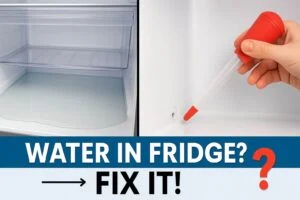
A refrigerator should keep food cold without leaving water on the floor or collecting puddles inside. When you notice water near the bottom of your refrigerator, the problem may come from a blocked drain, a damaged water line, excessive frost, or a door that does not seal correctly. Finding the source early can prevent floor damage, spoiled food, and more expensive repairs.
If you notice water leaking from bottom of fridge inside, do not ignore it. Water that starts inside the refrigerator can travel underneath drawers and eventually reach the floor. Understanding the common causes can help you identify the issue and decide whether you can fix it yourself or need professional assistance.
Could a Clogged Defrost Drain Cause Water to Leak?
A clogged defrost drain is one of the most common reasons for water collecting at the bottom of a refrigerator.
During a normal defrost cycle, the refrigerator melts frost from the evaporator coil. The resulting water should flow through a small drain opening into a drain pan underneath the appliance. The water then evaporates naturally.
Food particles, ice, dust, and other debris can block this opening. When the drain becomes clogged, the melted water cannot leave the refrigerator properly. Instead, it may collect beneath the crisper drawers or spill onto the floor.
You can inspect the drain area for visible ice or debris. However, avoid using sharp objects because they can damage the drain tube or nearby components.
Can a Frozen Defrost Drain Create a Leak?
Yes, a frozen drain can produce symptoms similar to a clogged drain.
If the drain opening freezes, water from the defrost cycle has nowhere to go. It can accumulate inside the refrigerator and eventually escape from the bottom.
A frozen drain often develops when warm air enters the refrigerator repeatedly. A faulty door gasket, frequent door opening, or poor airflow can contribute to excessive frost and ice formation.
Unplugging the refrigerator and allowing the ice to melt naturally can sometimes clear the blockage. Always follow the manufacturer’s instructions before attempting any defrosting procedure.
Could a Damaged Water Supply Line Be the Problem?
Refrigerators with ice makers or water dispensers have additional water connections. A loose, cracked, or damaged water supply line can cause water to appear underneath the appliance.
Check the area behind the refrigerator for moisture around the water connection. Move the refrigerator carefully if you need to inspect the line, and avoid pulling too hard on the tubing.
A small leak can become a larger one over time, especially when the ice maker repeatedly calls for water. If you find a cracked hose or damaged connection, replacing the affected component usually provides a more reliable solution than simply wiping up the water.
Is the Refrigerator Water Filter Causing the Leak?
A poorly installed water filter can also cause leaking.
Some refrigerators use internal or external filters connected to the water system. If the filter does not lock into position correctly, water can escape around the housing. A damaged filter seal can cause a similar problem.
Remove and reinstall the filter according to the refrigerator’s instructions. Make sure it sits firmly in place and that the filter compartment closes properly.
If you recently replaced the filter and the leak started afterward, check the installation first. This simple step can save you from an unnecessary service call.
Can a Damaged Door Gasket Cause Water Inside?
The door gasket creates an airtight seal around the refrigerator compartment. When the gasket becomes cracked, loose, dirty, or damaged, warm air can enter the appliance.
Warm air contains moisture. When that moisture meets cold surfaces inside the refrigerator, condensation can form. In some cases, the excess moisture can collect near the bottom and eventually leak.
Clean the gasket with mild soapy water and inspect it for tears or gaps. Close the refrigerator door and check whether the gasket makes even contact around the entire frame.
If the seal remains loose or damaged, replacing the gasket may solve the moisture problem.
Could a Full Drain Pan Cause Water on the Floor?
The drain pan sits beneath the refrigerator and collects water from the defrost process. Normally, the water evaporates before the pan becomes full.
However, a cracked or improperly positioned drain pan can allow water to escape. Excessive frost can also produce more water than the pan normally handles.
If you can safely access the drain pan, inspect it for cracks, unusual water accumulation, or signs that it has shifted from its proper position. Some refrigerator designs make the pan difficult to access, so professional service may be appropriate.
Can Poor Refrigerator Leveling Cause Water to Leak?
Refrigerators need proper positioning to operate efficiently. If the appliance sits unevenly, water may not flow toward the drain as intended.
An uneven refrigerator can also affect the door seal. If the door does not close completely, warm air enters and increases condensation and frost.
Check whether the refrigerator rocks when you gently press it. Use the manufacturer’s leveling instructions to adjust the front legs or rollers. Avoid making adjustments without first checking the appliance manual.
Why Does Water Leak After a Power Outage?
A power outage can temporarily interrupt normal cooling and defrost functions. When the power returns, the refrigerator may need time to return to its normal operating temperature.
If the outage lasted several hours, ice may melt and create additional water. A refrigerator with an existing drain blockage can experience even more noticeable leakage during this period.
If you are wondering how to reset fridge after power outage, start by checking the manufacturer’s instructions. Some models automatically restart when power returns, while others may require you to adjust the temperature controls or use a reset procedure.
Before resetting the refrigerator, make sure the power connection is stable. If the appliance repeatedly trips a breaker, makes unusual electrical sounds, or fails to cool, stop using it and contact a qualified technician.
How Can You Find the Source of the Leak?
Finding the exact source makes troubleshooting much easier.
Start by drying all visible water. Then check these areas:
- Under the crisper drawers
- Around the defrost drain
- Near the water filter
- Around the ice maker
- Behind the refrigerator
- Around the water supply connection
- Underneath the appliance
- Around the door gasket
Look for fresh water rather than old moisture. A dry area can help you determine whether the leak originates inside, behind, or underneath the refrigerator.
Do not remove electrical panels or sealed refrigeration components unless you have the appropriate training.
What Simple Steps Can Help Prevent Refrigerator Leaks?
Regular maintenance can reduce the chance of water leaks.
Keep the refrigerator drain area clean and avoid placing food directly against drain openings. Clean the door gasket regularly and replace it when it becomes damaged.
If your refrigerator has a water dispenser or ice maker, inspect the supply line periodically. Replace water filters according to the manufacturer’s recommended schedule.
Avoid overloading the refrigerator because blocked vents can restrict airflow and contribute to uneven cooling and frost buildup.
Also, keep the appliance properly leveled and make sure the doors close completely after every use.
When Should You Call a Refrigerator Technician?
Some refrigerator leaks require professional attention. Contact a qualified technician if you notice a persistent leak, damaged internal components, repeated ice buildup, electrical problems, or a water line that you cannot safely repair.
You should also seek professional help if the refrigerator stops cooling, the compressor behaves unusually, or the leak continues after basic troubleshooting.
A small puddle may seem harmless, but continuous water exposure can damage flooring, cabinets, and electrical components.
Could Regular Maintenance Prevent Future Leaks?
Yes. A few simple habits can keep your refrigerator’s drainage and water systems working properly.
Clean spills promptly, inspect the door seal, maintain the correct temperature, replace water filters on schedule, and watch for unusual frost buildup. Pay attention to new sounds, moisture, or changes in cooling performance.
Fridge Mentor recommends treating unexplained water as an early warning rather than waiting for the problem to become severe.
What Is the Best Way to Stop Refrigerator Water Leaks?
The right solution depends on the source. A clogged drain may need cleaning, while a frozen drain may require proper defrosting. A loose filter or water connection may need reseating, while a cracked hose, drain pan, or door gasket may require replacement.
When you identify the source quickly, you can often prevent a minor issue from becoming an expensive repair. Fridge Mentor can also help homeowners understand common refrigerator problems and recognize when professional service makes sense.
If water continues to collect after basic checks, do not keep guessing. A qualified refrigerator technician can inspect the drainage system, water connections, defrost components, and seals to identify the underlying cause and restore reliable operation.

recent post
How Can Refrigerator Repair Orlando Services Fix Cooling Issues?
September 9, 2026
What Causes Water to Leak From the Bottom of a Refrigerator?
September 9, 2026

How Do You Find the Best Hollywood Orthodontist?
September 8, 2026

How Can Strength Pilates in Houston Improve Your Core Strength?
September 8, 2026

Is a Massage Shower System Suitable for Modern Bathrooms?
September 8, 2026
CONTACT US

Category
MUST READ
Popular Posts